

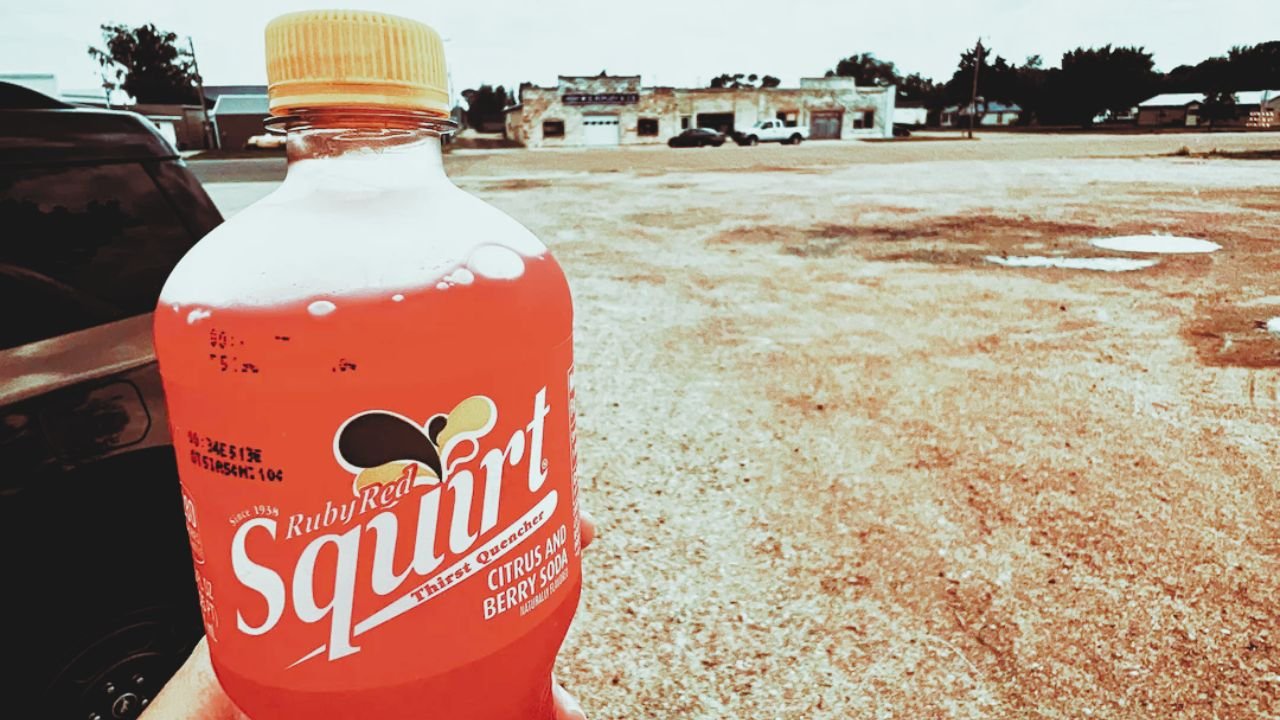
Ruby Red Squirt has quietly vanished from most store shelves across the United States. There was no formal announcement, no press release, and no clear explanation. It simply became harder and harder to find — region by region — until most consumers gave up looking.
This article examines what drove that disappearance, how beverage companies phase out niche flavors without saying so publicly, and what fans can realistically expect at this point.
What Ruby Red Squirt Is and Who Controls It
Ruby Red Squirt is a grapefruit-citrus line extension of Squirt, a soft drink brand with roots going back to the 1930s. It was positioned as a sweeter, ruby-grapefruit variation on the original — sold in cans and 20 oz bottles, typically in limited regional markets.
The brand is owned by Keurig Dr Pepper, the company that emerged from the Dr Pepper Snapple Group. Their consumer relations line (1-800-696-5891) and Plano, Texas mailing address confirm this ownership.
Ruby Red Squirt was never a flagship product. It was a secondary SKU within a niche brand family. That distinction matters a great deal when companies start making hard choices about what to produce and distribute.
No Official Statement, but the Shelves Tell a Different Story
Keurig Dr Pepper has not issued any formal notice declaring Ruby Red Squirt discontinued. No press release. No corporate FAQ entry. No public statement of any kind.
And yet, consumer reports from 2022 through 2024 consistently describe the product as unavailable in most retail locations. Online sourcing through normal channels has become difficult. A 2022 Reddit thread on r/Soda shows consumers concluding the product was gone based entirely on their inability to find it anywhere.
A separate analysis from the Daily News Post confirmed that while no official discontinuation announcement exists, availability has dropped sharply and most retailers no longer carry it.
This gap — between “not officially discontinued” and “effectively absent” — is not unusual. Large beverage companies routinely phase out low-volume products by quietly reducing production and pulling back distribution. There is rarely a public announcement because, frankly, few people outside the loyal customer base would notice or care. The silence is the strategy.
The Business Logic Behind Pulling a Niche Flavor
To understand why Ruby Red Squirt has largely disappeared, it helps to look at how beverage companies make portfolio decisions. The following reflects standard industry logic and business inference — not confirmed statements from Keurig Dr Pepper.
SKU Rationalization
Large beverage companies regularly eliminate slow-selling flavors to concentrate manufacturing resources on their core products. This is called SKU rationalization. A line extension like Ruby Red Squirt — with limited regional reach and modest sales volume — would rank poorly against original Squirt on any sales velocity report.
Think of it like a supermarket quietly stopping a slow-selling flavor of its private-label cereal. The brand continues; only the weakest performer gets cut. Ruby Red Squirt fits that profile precisely.
Bottler and Distributor Decisions
This is one of the more important mechanics that consumers often miss. Keurig Dr Pepper owns the brand, but independent regional bottlers decide which products to actually produce and distribute in their territories.
If a regional bottler stops ordering Ruby Red Squirt syrup or packaging, the product disappears from that entire area — even if it technically remains “available” within the corporate system. One Reddit commenter pointed out that a local Dr Pepper bottler rep is often the person who determines what gets stocked on shelves in a given state. When that rep stops ordering a flavor, it’s gone locally.
Post-COVID Supply-Chain Constraints
The pandemic created genuine shortages of aluminum cans, PET bottles, and certain ingredients. Beverage producers responded by streamlining their product lineups to keep factories running efficiently on higher-volume items. Niche flavors are typically the first candidates for reduction in those situations.
Many consumers in online forums note that Ruby Red Squirt became difficult to find around or shortly after the COVID-19 pandemic period — which aligns with this pattern.
Retail Shelf-Space Economics
Grocery retailers use scan data and periodic category resets to decide how to allocate shelf space. A slow-moving grapefruit soda extension competes poorly against high-velocity mainstream sodas and the rapidly growing energy drink category. When a product doesn’t justify its shelf footprint, retailers stop reordering it.
How Beverages Disappear Market by Market, Not All at Once
One thing that confuses consumers is that product phase-outs in the beverage industry rarely happen uniformly. A soda doesn’t vanish from every store on the same day. It fades out region by region, bottler by bottler.
A useful example: in 2024, a Reddit user posted a photo of Ruby Red Squirt sitting on a store shelf in Springview, Nebraska — population 242. While consumers in major cities had assumed the product was long gone, a small independent grocer in a rural market still had it in stock, supplied by a local bottler still running it.
This is what industry observers sometimes call “pocket availability.” A product can be effectively dead in most markets while still trickling through one or two regional bottlers in isolated areas. It creates real confusion for consumers who hear someone say they found it last week, while their own searches turn up nothing.
Keurig Dr Pepper’s consumer relations line can reportedly check whether the product has shipped within 100 miles of a given ZIP code — a detail that illustrates just how granular and locally dependent beverage distribution actually is.
Secondary Markets and What Scarcity Does to Pricing
When a product disappears from normal retail channels, a secondary market tends to emerge. In the same 2022 Reddit thread, one user noted that Diet Ruby Red Squirt was still available on Amazon — 24 cans for around $36, sold by a reseller based in New York.
For context, a 24-pack of a mainstream soda typically runs $8 to $12 at a grocery store. That markup reflects basic supply and demand: limited supply, loyal buyers willing to pay more.
This kind of secondary-market pricing is a reliable signal that a product is no longer moving through standard distribution. When fans are paying a significant premium to have it shipped from a third-party seller, the product has effectively left normal commercial circulation.
What This Means for the Squirt Brand and Keurig Dr Pepper’s Strategy
Ruby Red Squirt’s situation illustrates a broader tension in beverage portfolio management. Squirt itself is a legacy regional brand — not a top-tier national performer. Adding a line extension like Ruby Red Squirt stretches manufacturing and distribution requirements further for a product that was never going to post strong national numbers.
Pulling back on that extension while keeping the core Squirt product is a defensible business decision. It simplifies operations, reduces inventory complexity, and focuses resources on the brand’s highest-volume format.
Within the citrus soda segment, Squirt competes against brands like Fresca, Jarritos toronja, and various store-brand grapefruit options. Losing a variant doesn’t fundamentally change that competitive picture — but it does leave a specific group of loyal consumers without their preferred product.
For readers interested in broader beverage industry trends and brand strategy, Today Business Point covers these topics on an ongoing basis.
Is There Any Chance Ruby Red Squirt Comes Back?
No public plans to reintroduce or expand Ruby Red Squirt distribution have been announced. That said, the Daily News Post piece notes that beverage companies do monitor consumer feedback. Occasionally, products return in limited or seasonal formats when companies see enough demonstrated demand.
The pattern exists in the industry. Whether it applies to Ruby Red Squirt depends on whether Keurig Dr Pepper sees sufficient commercial justification — not nostalgia alone, but actual purchase volume that warrants re-engaging bottlers and rebuilding retail placement.
At this point, that case has not been made publicly.
Practical Guidance for Consumers
If you’re looking for Ruby Red Squirt, here is what the available information suggests:
- Call Keurig Dr Pepper consumer relations at 1-800-696-5891 and provide your ZIP code. They can check whether the product has shipped to your region recently.
- Contact your local store’s beverage category manager or check with regional bottlers directly — availability is driven at the local level.
- Expect to pay a significant markup if sourcing through third-party online sellers. Treat that as a short-term option, not a reliable supply chain.
- Original Squirt remains widely available and is the closest replacement in terms of flavor profile.
- Other grapefruit sodas — including Fresca and Jarritos toronja — offer a similar citrus-forward taste if you’re looking for everyday alternatives.
The Takeaway
Ruby Red Squirt has not been formally discontinued, but it has been effectively removed from most U.S. markets through a gradual, region-by-region withdrawal driven by standard business factors — SKU rationalization, bottler decisions, post-COVID supply constraints, and retail shelf economics.
The absence of an official announcement doesn’t mean the product is actively available. It means the company hasn’t committed publicly to either position. For consumers, the practical reality is clear: Ruby Red Squirt is very hard to find in most markets, and there is no indication that will change in the near term.
Also Read: