

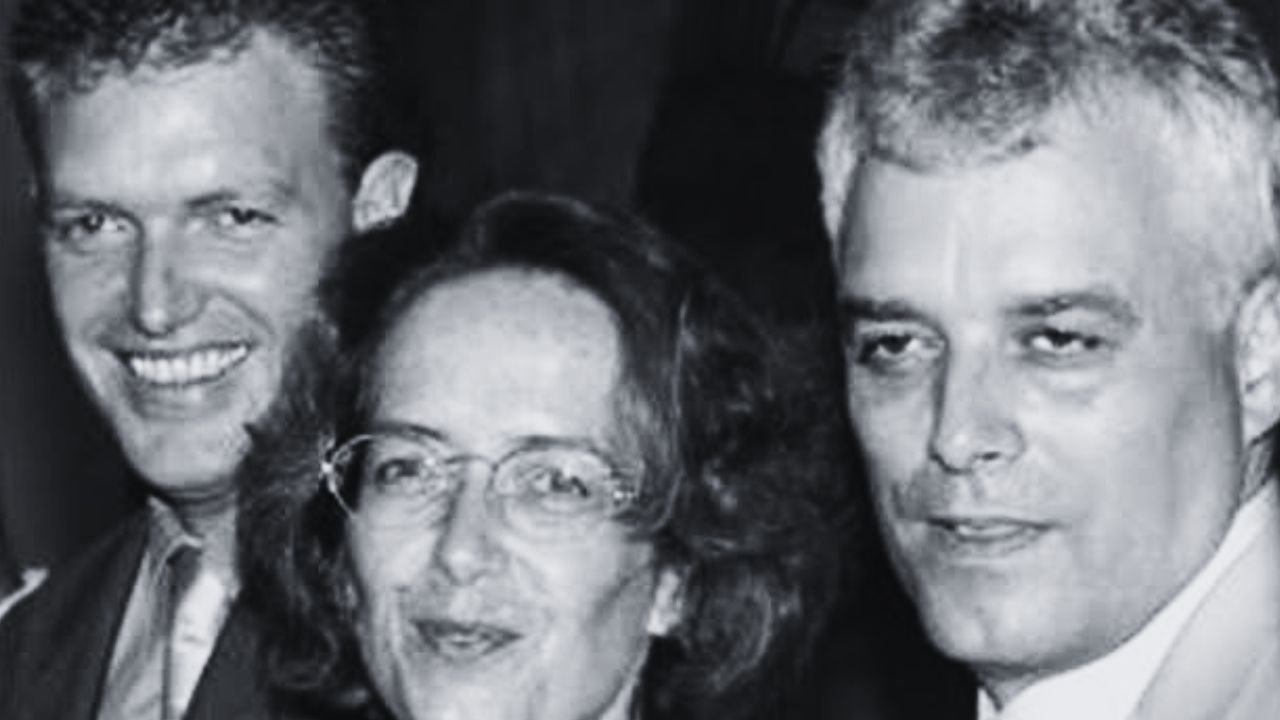
In 2003, three German siblings came forward with a claim that changed how many people understood Charles A. Lindbergh. The aviation pioneer — famous worldwide for his 1927 solo transatlantic flight — had reportedly maintained a secret family in Germany, entirely separate from his public life and his marriage to writer Anne Morrow Lindbergh.
One of those siblings was Dyrk Hesshaimer. This article covers who he is, who his mother was, how the siblings pieced together the truth about their parentage, and what evidence ultimately confirmed the connection to one of the most recognized names in aviation history.
Who Dyrk Hesshaimer Is?
Dyrk Hesshaimer is not a public figure in the conventional sense. He does not have a film career, a music catalog, or a well-documented professional life. His name appears in historical accounts and genealogy searches almost entirely because of one thing: his confirmed biological connection to Charles A. Lindbergh.
Born in 1958, Dyrk was raised in Germany. He is the eldest of three siblings who share the same parentage. His sister, Astrid Bouteuil, was born in 1960, and his brother, David Hesshaimer, was born in 1967. CBS News and AVweb both identify Dyrk as the eldest of the three.
Outside of his connection to the Lindbergh story, there is very little reliable public information about Dyrk’s career, personal life, or current activities. The published record focuses almost entirely on the family revelation, the evidence behind it, and the book that followed.
His Mother, Brigitte Hesshaimer, and Her Relationship with Lindbergh
The story starts with Brigitte Hesshaimer. She was a hatmaker based in Munich and, according to contemporary reporting, she maintained a long-running private relationship with Charles Lindbergh.
Lindbergh was married throughout this period to Anne Morrow Lindbergh, a writer and aviator in her own right. The relationship with Brigitte Hesshaimer was kept entirely out of public view during Lindbergh’s lifetime. Brigitte did not publicly identify him as the father of her children, and the arrangement remained hidden until years after his death in 1974.
The three children — Dyrk, Astrid, and David — were raised in Germany. Their births span nearly a decade, from 1958 to 1967, which indicates the relationship between Brigitte and Lindbergh extended over a significant length of time.
When the Siblings Learned Who Their Father Was?
The siblings did not grow up knowing that Charles Lindbergh was their father. According to CBS News, it was Astrid who began asking questions in the early 1980s that eventually led the family toward the full picture of their parentage.
Some published accounts suggest the siblings learned the identity of their father after Lindbergh’s death in 1974. Other reports point to the early 1980s as when the discovery process began. These two versions are not necessarily contradictory — it is possible the siblings had some awareness after his death but did not fully understand or confirm the story until later. The exact timeline differs slightly depending on the source, and it is worth holding that uncertainty rather than settling on one fixed date.
What is clear is that by the time the family went public in 2003, Dyrk was in his mid-forties and had been living with this knowledge as an adult for some years. The disclosure was deliberate and organized, not accidental.
The Evidence — 112 Letters and a DNA Test
The family presented two distinct forms of evidence, and it matters to understand what each one proved.
The Letters
The family produced a collection of 112 letters that they said had been written by Charles Lindbergh to Brigitte Hesshaimer. These letters served as documentary evidence of a personal relationship between the two. They help establish that contact existed and was sustained over time.
NBC News reported on the letters as part of the 2003 disclosure. However, letters alone establish a relationship — they do not confirm biological parentage. That required a separate step.
The DNA Test
DNA testing was conducted through Ludwig Maximilian University of Munich. For the comparison to work, the family needed a genetic sample from the Lindbergh side. That sample was supplied by Morgan Lindbergh, a grandson of Charles Lindbergh.
Contemporary reporting, including accounts from The Independent and AVweb, described the probability of paternity as 99.9 percent. It is worth noting that this figure comes from reporting at the time, rather than from a publicly available laboratory report — but it was widely cited across multiple outlets covering the story.
The two types of evidence answer different questions. The letters show that Lindbergh and Brigitte Hesshaimer had a sustained personal connection. The DNA test addresses whether Lindbergh was the biological father of her children. Both pointed in the same direction.
What the Siblings Said They Wanted?
When the story became public, some people naturally wondered whether the siblings were seeking money or a share of the Lindbergh estate. According to CBS News and NBC News, that was not their stated goal.
The siblings said they wanted acknowledgment. They were not pursuing a legal claim as heirs, and reports at the time indicated they did not intend to seek financial inheritance. For Dyrk, Astrid, and David, the priority appeared to be recognition — having the truth of their parentage confirmed and documented.
That framing shaped how the story was received. It made the siblings appear less interested in the material implications of their connection to Lindbergh and more focused on the historical record.
The Book and Dyrk’s Public Role
Following the 2003 disclosure, the siblings worked with German author Rudolf Schroeck on a book titled The Double Life of Charles A. Lindbergh, published in 2005. The book drew on the family’s account of Brigitte Hesshaimer’s relationship with Lindbergh and gave the story a more complete documentary form.
Dyrk appeared alongside his siblings at press events in Germany connected to the book. The Tampa Bay Times noted his participation in at least one public signing. Beyond that, his involvement in public life connected to this story appears limited to the period surrounding the 2003 disclosure and the 2005 publication.
For readers finding Dyrk’s name on genealogy platforms like MyHeritage or Ancestry, it is worth keeping in mind that many of those profiles draw from newspaper reports or user-submitted information. They should not automatically be treated as independently verified records. The most reliable documentation comes from the contemporary reporting and from the DNA-testing account linked to Ludwig Maximilian University of Munich.
Charles Lindbergh: The Public Figure Behind the Private Story
To understand why this revelation attracted so much attention, it helps to know what Lindbergh represented publicly. In May 1927, he completed the first solo nonstop transatlantic flight from New York to Paris in his plane, the Spirit of St. Louis. The flight made him an international figure almost overnight.
His public life — the heroic aviator, the family man married to Anne Morrow Lindbergh — stood in sharp contrast to what the Hesshaimer siblings’ story revealed. The idea that he had maintained a separate family in Germany, unknown to the public for decades, complicated a legacy that many had treated as settled history.
For anyone researching Lindbergh’s biography, the Hesshaimer branch of his family is now part of the documented record. Coverage of this story also noted that separate claims existed about other undisclosed relationships, though those require their own verification and fall outside the scope of what the Hesshaimer siblings presented.
If you are interested in stories where personal history intersects with public legacy, TodayBusinessPoint covers a wide range of profiles and background pieces worth exploring.
What We Can Say — and What We Cannot?
Dyrk Hesshaimer’s public record is narrow. His name is documented in connection with his mother Brigitte, his siblings Astrid and David, the 112 letters, the DNA testing, and the book published in 2005. Beyond that, reliable public sources do not offer detail about his occupation, relationships, health, or current life.
That limitation is worth being honest about. Not every person connected to a famous name has an extensive public biography. Dyrk became part of the public record because of events largely outside his control — the choices made by his parents and the DNA evidence that confirmed what his family already believed.
A Final Note
Dyrk Hesshaimer’s story is, at its core, about a family that lived for decades without official recognition of who their father was. When they finally went public, they brought letters, a DNA test, and a straightforward request: acknowledge us.
The scientific evidence supported them. The 99.9 percent probability figure reported by contemporary sources, the involvement of Morgan Lindbergh in the testing process, and the documentary record of the letters together built a case that was difficult to dispute.
For historians, genealogists, and people curious about Charles Lindbergh’s full biography, Dyrk Hesshaimer represents something real and documented: a previously hidden son, now part of the confirmed record.
Also Read: