

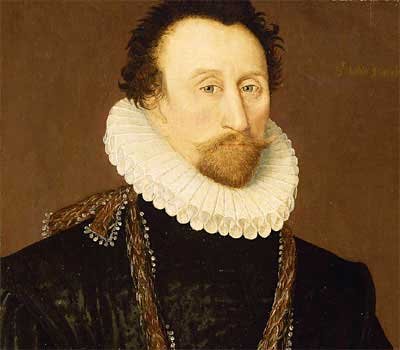
The name John Hawkins appears in genealogy databases, history books, and online family trees more times than most people expect. The problem is that these records often point to completely different people. Some entries are for a Tudor-era naval commander. Others refer to an 18th-century writer. Still others describe men who lived in colonial America and share little more than the name.
The most historically significant person to carry this name is Admiral Sir John Hawkins — a 16th-century English naval officer, merchant, shipbuilder, and government administrator who served during the reign of Queen Elizabeth I. His career was wide-ranging and deeply complicated. This article walks through who he was, where he came from, what he did, and why his legacy cannot be reduced to a simple story.
The Most Prominent John Hawkins in the Historical Record
Admiral Sir John Hawkins — also spelled “Hawkyns” in older records — was born around 1532 in Plymouth, Devon, England. He died in 1595, though some genealogy sources give conflicting dates. The discrepancy is worth noting because online family trees sometimes list different years without explanation.
Before going further, it helps to be clear about who this article is not about. There is a separate John Hawkins born in 1719 who was a writer and friend of Samuel Johnson. Westminster Abbey records confirm he is buried there and has no documented connection to the Tudor admiral. There are also several colonial American men named John Hawkins — at least one of whom FamilySearch explicitly labels as having unknown and unproven origins.
The point is simple: the name John Hawkins is common enough that birthplace, occupation, dates, and family connections are all necessary before assuming any record refers to the same person. Without those details, you are likely looking at entirely different individuals.
His Family and Early Background
John Hawkins came from a Plymouth family with deep roots in the maritime world. According to genealogy platforms including MyHeritage and Geni, his parents were William Hawkins and Joan Trelawney. These sources are user-contributed, so the parent names should be treated as reasonable research leads rather than confirmed facts — ideally verified against parish records or other primary sources.
What does seem well-established is that the Hawkins family was part of Plymouth’s seafaring and merchant community. Plymouth in the 16th century was a busy working port. Families like the Hawkinses were involved in shipbuilding and maritime trade, not as a side interest but as their main livelihood.
Growing up in that environment gave John Hawkins early exposure to ships, ocean commerce, and the business of running voyages. That upbringing shaped nearly everything he went on to do professionally.
What John Hawkins Did — His Career in Brief?
Hawkins wore many hats, and in Tudor England, that was not unusual. The roles of merchant, naval officer, privateer, and government administrator were not as clearly separated as they are today. A man could hold all of them at once.
He conducted commercial voyages in the early part of his career, then moved into naval administration. He became one of the senior officials responsible for organizing and modernizing the English fleet. That work put him in a central position when England prepared for the Spanish Armada in 1588 — one of the most significant naval confrontations of the era.
Hawkins is credited with helping to reform the design and management of English warships during the years leading up to that conflict. His administrative contributions were considered important enough that he received recognition from the crown.
His life ended during active service. He died in 1595 while on a naval expedition to the Caribbean, alongside Sir Francis Drake. That expedition did not go well for either man — Drake died on the same voyage, just months later.
His Alleged Connection to Francis Drake
Online genealogy records frequently link Hawkins and Drake as relatives or close associates. The professional connection is well documented — they sailed together, and Hawkins is said to have been an early patron or associate of Drake’s career. However, the exact nature of any family relationship should be approached with caution.
Geni and similar platforms list various genealogical links between the two men, but user-contributed trees are not always verified. A documented professional association is not the same as a documented blood relationship. Until that connection is traced through reliable records — wills, parish registers, or contemporary biographical sources — it should be described carefully rather than as settled fact.
His Role in the Transatlantic Slave Trade
This part of Hawkins’s career is not a footnote. It is central to understanding who he was.
During the 1560s, Hawkins led multiple voyages that transported enslaved Africans to Spanish colonies in the Americas. He is recognized as one of the earliest English figures to participate in the transatlantic slave trade. These voyages were commercially motivated, and historical accounts suggest they operated with at least some awareness and support from the royal court.
Modern biographical accounts of Hawkins deal with this directly, and there is good reason for that. His naval career and his involvement in slavery are not two separate stories. They happened at the same time, involved the same ships, and were driven by the same commercial and political goals.
Presenting him only as a naval reformer or an Elizabethan hero would leave out something that is a matter of documented record. A complete picture of his life includes both his administrative achievements and his direct participation in one of history’s most harmful trades.
This is not about judging a 16th-century figure by 21st-century standards alone — it is about accuracy. People who want to understand Hawkins deserve the full account.
Why Genealogy Records Can Be Confusing?
If you have searched for John Hawkins on any major genealogy platform, you may have come away more confused than when you started. That is a common experience, and there are real reasons for it.
User-contributed family trees sometimes combine different people with the same name into a single profile. Dates get copied incorrectly. Relationships that are actually professional or circumstantial get listed as family connections. Duplicate entries exist for the same individual across multiple platforms.
FamilySearch’s own records illustrate this clearly. One entry for a colonial American John Hawkins (born 1625) explicitly states that his origins are unknown and unproven. Another entry covers a separate John Hawkins born in Virginia in 1656, who has no documented connection to the Tudor admiral. A Geni profile for a colonial-era John Hawkins even notes that there is no known relationship to Admiral Hawkins’s family.
These are responsible disclosures, but not every record is so transparent. For anyone researching their own family history, finding the name John Hawkins in a tree is a starting point — not a conclusion. The connection needs to be confirmed through actual documents: wills, parish records, land deeds, or probate files.
For more background on how to approach historical figures in public records, Today Business Point covers a range of research and public-interest topics worth exploring.
What His Legacy Actually Looks Like Today?
Hawkins left behind a complicated record. On one side, he played a real part in building the naval capacity that allowed England to hold off the Spanish Armada. He modernized fleet administration and served as a capable government official during a period of intense maritime competition between European powers.
On the other side, he was a direct participant in the transatlantic slave trade at a time when England was beginning its long and destructive involvement in that system. Those voyages in the 1560s were not incidental to his career — they were part of how he built his reputation and finances.
Historians today generally present both sides together, which is the appropriate approach. There is no version of his story that can honestly leave either part out.
A Few Things Worth Remembering
- Admiral Sir John Hawkins was born around 1532 in Plymouth, Devon, and died in 1595.
- He is a different person from the 18th-century writer John Hawkins, buried at Westminster Abbey.
- His parents are listed as William Hawkins and Joan Trelawney on user-contributed genealogy sites, but this should be verified against primary records.
- His connection to Francis Drake was professional and well documented; any claimed blood relationship needs stronger sourcing.
- He was involved in the transatlantic slave trade — this is part of his documented history, not a contested footnote.
- Online genealogy records for anyone named John Hawkins should be cross-referenced carefully before drawing conclusions.
Conclusion
Admiral Sir John Hawkins was a real and significant historical figure whose career reflected the full complexity of Tudor England — its naval ambitions, its commercial drive, and its early involvement in the slave trade. He was not a one-dimensional hero or villain. He was a person whose life touched several of the most consequential forces of his era.
If you have come across the name John Hawkins in a family tree or historical record, the most useful thing you can do is slow down. Confirm the dates, the birthplace, and the family connections before assuming the record refers to this man — or to any single individual. The name is common, the records are often incomplete, and the history is more layered than most online summaries suggest.
A careful, document-based approach will always tell you more than a quick search result.
Also Read: