

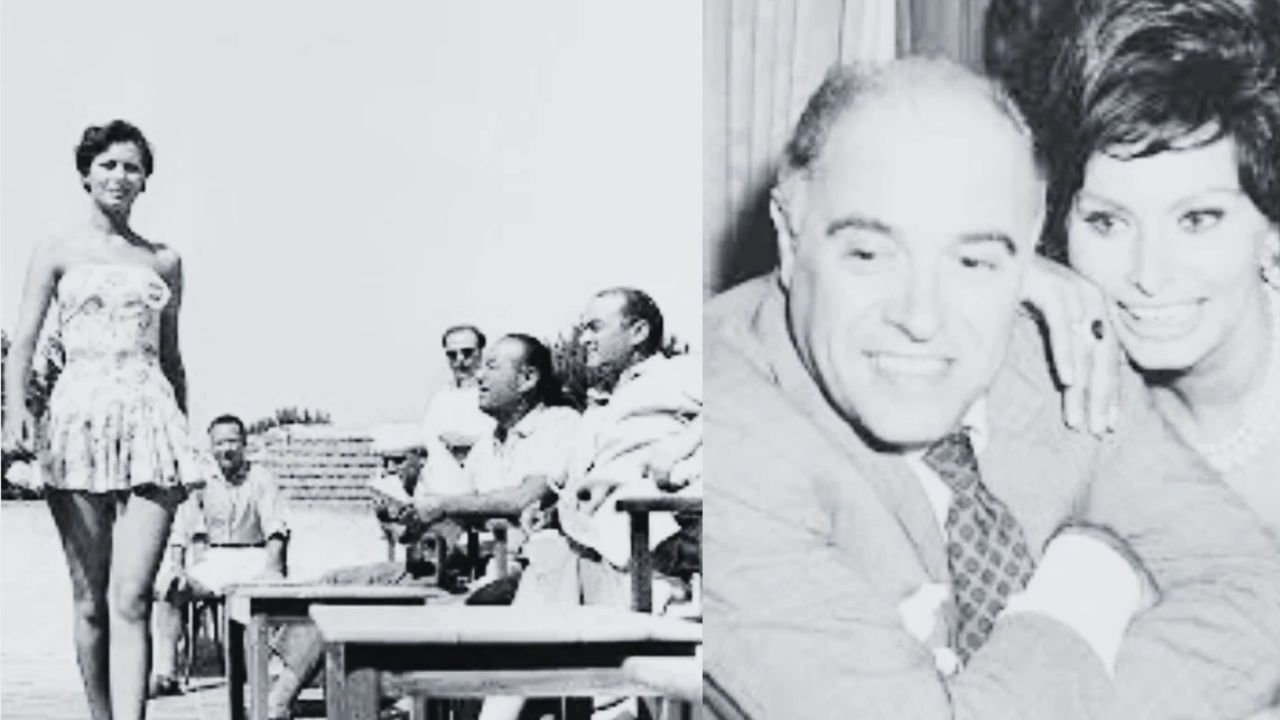
Most people who come across the name Giuliana Fiastri find it while searching for Carlo Ponti or Sophia Loren. That is not surprising. Fiastri was never a public figure, never appeared in films, and left very little documented biography behind. Yet her name keeps appearing in genealogy databases and celebrity profiles because of who she married.
This article covers what is reliably known about Giuliana Fiastri — her marriage to Carlo Ponti, the children they had together, and how her family history connects to one of the most famous couples in Italian cinema. It also points out where the available information is limited or unverified, so readers can approach it with appropriate care.
Who Giuliana Fiastri Was?
Giuliana Fiastri was an Italian woman, not an actress, producer, or celebrity of any kind. She is known almost entirely because she was Carlo Ponti’s first wife. Outside of that connection, her public biography is very thin.
The Los Angeles Times, in its obituary coverage of Carlo Ponti, described Fiastri as the daughter of an Italian general. That detail suggests a military or upper-class family background, though it comes from a small number of sources and should be treated as reported rather than fully documented.
Genealogy records, including an entry on FamilySearch, list her approximate birth and death years as around 1925 and 2006. These dates are drawn from user-contributed databases, not certified civil records. They are useful as a general reference but have not been independently confirmed. Readers doing serious genealogy research should look for primary records before treating these figures as settled facts.
Her Marriage to Carlo Ponti
Giuliana Fiastri and Carlo Ponti married on March 30, 1946. Both the FamilySearch entry and the Los Angeles Times support this date, making it one of the more reliably documented facts about her life.
At the time of the marriage, Ponti was already a recognizable name in Italian cinema. He had been working as a film producer since the late 1930s, and his career was growing steadily. By the postwar years, he would become one of the most influential producers in European film.
Their marriage was a private one. No reliable source describes the full circumstances of how they met or what their relationship was like. It was not a media event, and Fiastri herself appeared to remain well outside public life throughout their time together.
A Brief Note on Carlo Ponti
Carlo Ponti was born in 1912 and died in 2007. His career as a producer shaped a significant part of Italian and international postwar cinema. He worked with directors including Federico Fellini and later produced major films starring Sophia Loren, whom he eventually married. Understanding Ponti’s career helps explain why Fiastri’s name keeps appearing — she was the first chapter of his personal history before he became internationally known.
Their Children: Guendalina and Alessandro Ponti
Giuliana Fiastri and Carlo Ponti had two children together. Their daughter, Guendalina Ponti, was born in 1951, and their son, Alessandro Ponti, was born in 1953. Both names appear in the FamilySearch record, and the Los Angeles Times confirms that Ponti had two children from his first marriage.
One small but useful point for genealogy researchers: some older articles and databases spell Guendalina’s name as “Guendolina.” These two spellings refer to the same person. If you are tracing this family and see both versions, do not assume they represent two different individuals. It is simply a spelling variation that crept into secondary sources over time.
Both Guendalina and Alessandro grew up as part of the Ponti family. As their father’s life changed — including his later marriage to Sophia Loren — they became part of a broader, more publicly known family. Loren and Ponti went on to have two sons of their own, Carlo Ponti Jr. and Edoardo Ponti. The two sets of children shared the same father but came from very different chapters of his life.
Carlo Ponti, Sophia Loren, and the Legal Complications That Followed
While still married to Fiastri, Ponti began a romantic relationship with actress Sophia Loren in the early 1950s. Loren was then a rising star in Italian cinema, and Ponti had played a role in developing her career as a producer.
The relationship created serious legal difficulties. Italian law at the time did not permit divorce, which meant Ponti could not simply end his marriage to Fiastri and marry Loren. The situation forced the couple to navigate a complicated legal path over many years.
Ponti and Loren did attempt an earlier marriage, but it was later annulled. Both faced legal pressure in Italy during this period, and at one point the relationship put them at risk of criminal charges under Italian law. The circumstances were not simply a matter of ignoring rules — they involved overlapping Italian and French legal systems, questions of nationality, and years of unresolved status.
They were finally able to marry legally in France in 1966, after Ponti obtained a divorce and both had addressed the nationality issues involved. It was only at that point that their relationship had a clear legal foundation.
As for Giuliana Fiastri’s role in all of this — she is not documented as having made any public statement about Ponti’s relationship with Loren, the legal proceedings, or how these events affected her personally. It would not be accurate or fair to speculate about her private response. What can be said is that she raised two children during and after a difficult period, and she remained out of the public eye throughout.
What Genealogy Sources Tell Us — and What They Don’t?
Much of what appears online about Giuliana Fiastri comes from user-contributed genealogy databases like FamilySearch and MyHeritage. These platforms can be genuinely useful starting points, but they carry an important limitation: the entries are submitted and edited by members of the public, not by professional historians or government record offices.
This means that details like her birth year, death year, and family background should be treated as research leads rather than confirmed biography. If you find a date in a family tree, the next step is to look for a primary source — a birth certificate, marriage record, or credible newspaper reference — that supports it.
The same caution applies to descriptions of her family background. The claim that she was the daughter of an Italian general appears in the Los Angeles Times, which is a reputable source, but it is a single reference. There is no detailed, independently verified record of her parentage or upbringing available to the general public.
For anyone researching Italian family history from this period, resources like Todaybusinesspoint can help with understanding how to approach genealogy research with appropriate source standards.
Keeping the Known and the Unknown Separate
It is easy, when reading about someone connected to famous figures, to fill in gaps with assumptions. With Giuliana Fiastri, the gaps are significant. What is confirmed is relatively narrow: she married Carlo Ponti in 1946, they had two children named Guendalina and Alessandro, and she came from a family described as having military connections.
What is not confirmed includes the full details of her upbringing, her education, her life after the marriage ended, what she did in later years, and when and how she died. The approximate date of 2006 appears in genealogy records, but without a primary source to support it, it should be held loosely.
She was not an actress. She was not a producer. She was not a celebrity in any recognized sense. She was a private person who happened to be married to a man who became very famous — and whose second marriage became one of the most discussed relationships in the history of Italian cinema.
Conclusion
Giuliana Fiastri’s story is a reminder that behind well-known public figures, there are often private individuals whose lives intersected with history in significant ways, even if the records are thin.
She married Carlo Ponti in 1946, had two children with him, and lived a life that was never intended for public attention. The details that do exist come from a small number of reliable sources, supplemented by genealogy databases that require careful handling. The larger story — of Ponti, Loren, and postwar Italian cinema — is well documented. Fiastri’s part in that story is real, but it is also genuinely limited in what can be confirmed.
Readers who come across her name in family history research should use the confirmed facts as anchors and approach anything beyond those with appropriate skepticism. That is simply what the evidence supports.
Also Read: