

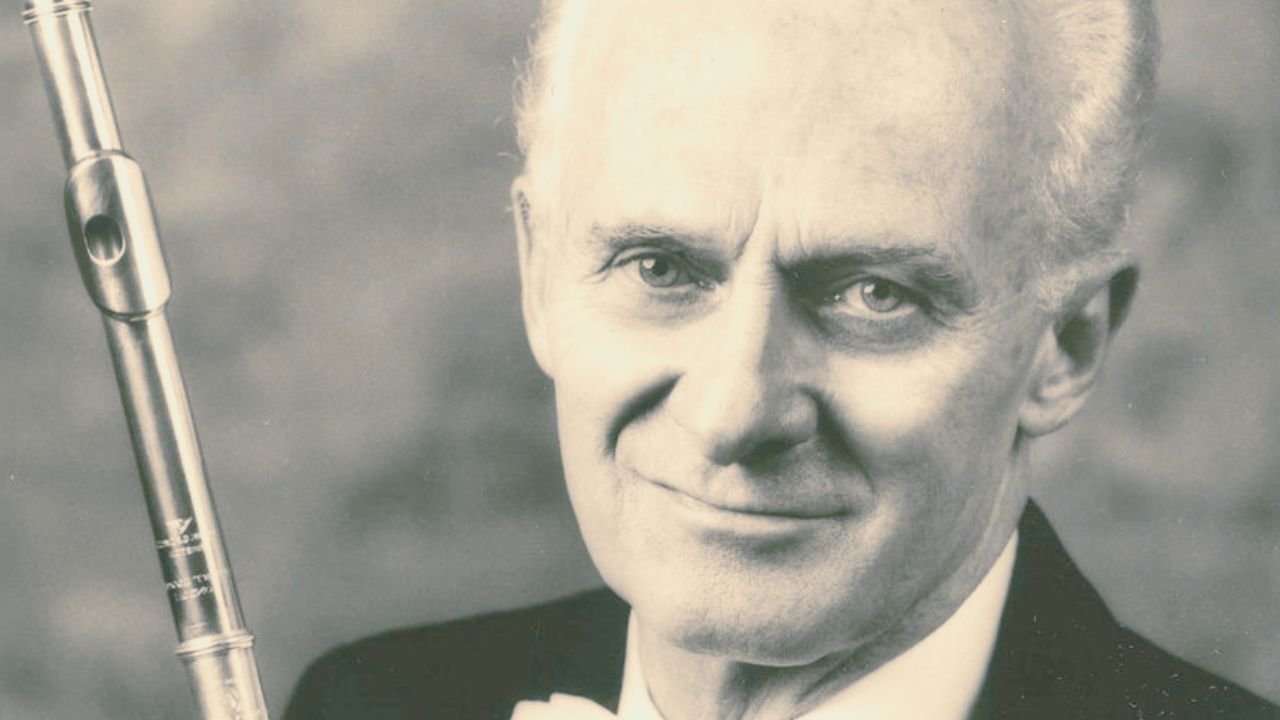
The name Donald Peck shows up in genealogy searches, public records, and obituary databases. Several unrelated people share this name, which can make it confusing to track down the right person. But one Donald Peck stands apart from the rest — a flutist who spent more than four decades at the top of one of America’s most respected classical music institutions.
This article covers who Donald Peck was, where he came from, what made his career significant, and how to avoid mixing him up with other people who happen to share his name.
Who Was Donald Peck?
Donald Peck was born on January 26, 1930, in Yakima, Washington. He died on April 29, 2022. His career was not in film, television, or popular entertainment. He was a classical musician — specifically, a flutist who served as the principal flute of the Chicago Symphony Orchestra for more than 40 years.
That distinction matters. When people search his name expecting a celebrity in the Hollywood sense, they may be surprised. But within the world of classical music, Donald Peck was a well-regarded and long-serving professional whose legacy is tied directly to one of the country’s leading orchestras.
It is also worth noting that the name Donald Peck is not unique. A separate obituary on Legacy.com describes a Donald Peck born in Torrington, Connecticut, with an entirely different family and life history. These are two different people. When trying to identify the correct Donald Peck in any search or family tree, the key identifiers are his birth date (January 26, 1930), his birthplace (Yakima, Washington), and his profession as an orchestral flutist.
Early Life and Musical Roots in the Pacific Northwest
Donald Peck grew up in the Pacific Northwest, and his early musical life was rooted there. He received his initial training in Seattle, which at the time had a growing community of young musicians and youth performance programs.
As a young musician, he played with the Seattle Youth Symphony Orchestra. He also performed with the Seattle Philharmonic Orchestra before eventually joining the Seattle Symphony. These weren’t just resume entries — they were formative experiences that built the technical foundation he would later bring to a much larger stage.
The Pacific Northwest in the mid-twentieth century was not the most obvious launching pad for a major orchestral career. That Peck made the leap from regional youth ensembles to one of America’s premier orchestras says something about the level of skill he developed during those early years.
His Career With the Chicago Symphony Orchestra
Donald Peck joined the Chicago Symphony Orchestra in 1957. At that time, the orchestra was under the direction of Fritz Reiner, one of the most demanding and respected conductors of the era. Reiner promoted Peck to the role of principal flute — a decision that set the course for Peck’s entire professional life.
He held that position for more than 40 years. He retired in 1999, closing out a career that spanned several eras of the orchestra’s development and multiple music directors. That kind of longevity in a single principal chair is rare in any major orchestra.
His membership in the Chicago Symphony ran from 1957 to 1999 — a span of 42 years. During that time, the orchestra recorded extensively, toured internationally, and built a global reputation. Peck was part of that institution through all of it, playing the solo passages and leading the flute section in hundreds of performances.
It is important to be precise about his role. He was the principal flute, not a conductor, music director, or administrative leader of the orchestra. His contribution was as a performing musician, and that is exactly what makes his tenure notable — four decades of consistent, high-level performance in one of the most visible roles in a major ensemble.
Why Principal Flute Matters in a Major Orchestra?
Not everyone outside classical music knows what a principal flutist actually does. It helps to understand the role in order to appreciate why Peck’s tenure was significant.
In a full symphony orchestra, each instrument section has a principal player. That person leads their section, sets the tone for how the section sounds together, and plays any solo passages written for that instrument in the repertoire. For the flute, there are many such moments — prominent solos, exposed melodic lines, and passages where the entire orchestra listens to what the flutist does.
In a major orchestra like the Chicago Symphony, the principal flute chair is one of the most competitive positions in the professional music world. Auditions draw candidates from across the country and beyond. Keeping that chair for more than 40 years reflects not just early talent but sustained excellence over a long career.
When an orchestra maintains the same principal player in a section for decades, that player’s sound and approach become part of the orchestra’s identity. Peck’s voice as a flutist was woven into the Chicago Symphony’s sound through most of the second half of the twentieth century.
Navigating the Name: How to Tell Donald Pecks Apart
If you have encountered the name Donald Peck through a genealogy search or a celebrity-related article, it is worth pausing to verify which person you are actually looking at.
The Chicago Symphony flutist has a clear paper trail through institutional sources — the orchestra’s own remembrance page, its archives, and cross-referenced biographical entries. His birth date, birthplace, and career details are consistent across those sources.
Other people named Donald Peck appear in unrelated records. As noted earlier, a Legacy.com obituary describes a Donald Peck from Connecticut with a completely different background and family. These profiles should not be combined or confused with the flutist’s biography.
Some searches may also surface a vague reference to a “Donald” listed as the only brother of an unnamed actor. The available material does not confirm that this person’s surname was Peck or that he was the same person as the Chicago Symphony musician. Without clearer sourcing, that connection should not be treated as confirmed.
The practical rule is straightforward: use birth date, birthplace, and profession together to identify which Donald Peck a source is actually describing. A record pointing to a flutist born in Yakima in 1930 is pointing to the Chicago Symphony musician. A record describing a Connecticut-born genealogy researcher with different family members is pointing to someone else entirely.
For readers doing deeper research, resources like Todaybusinesspoint can be useful for context on how to approach public figures and biographical verification in a careful, fact-based way.
Donald Peck’s Death and the Orchestra’s Remembrance
Donald Peck died on April 29, 2022. The Chicago Symphony Orchestra published a formal remembrance on that same date, honoring his contributions to the institution.
The remembrance confirmed the key facts of his career — his membership from 1957 to 1999 and his role as principal flute for more than four decades. The acknowledgment from the orchestra itself reflects how his peers and the institution regarded him. He was not simply a long-serving employee; he was a musician whose work helped define what the orchestra sounded like for a generation.
His death at age 92 came more than two decades after his retirement, suggesting he lived a full life well beyond his performing years. The classical music community noted his passing, and the Chicago Symphony’s response was a measured but meaningful tribute from the organization he had served for so long.
A Career Worth Knowing
Donald Peck was not a pop star, a film actor, or a television personality. By traditional celebrity standards, his name may not carry instant recognition outside of classical music circles. But his record is genuinely impressive — more than 40 years as the principal flute of one of America’s most storied orchestras, starting under Fritz Reiner and lasting through the careers of multiple music directors.
He came from modest Pacific Northwest beginnings, trained in Seattle’s youth and community orchestras, and went on to hold one of the most demanding positions in American classical music for the better part of his working life. That is a career worth documenting clearly and accurately.
If you came here looking to confirm who Donald Peck was, the answer is now on the record: a highly skilled, long-serving orchestral musician whose professional life was defined by his decades of work with the Chicago Symphony Orchestra.
Also Read: