

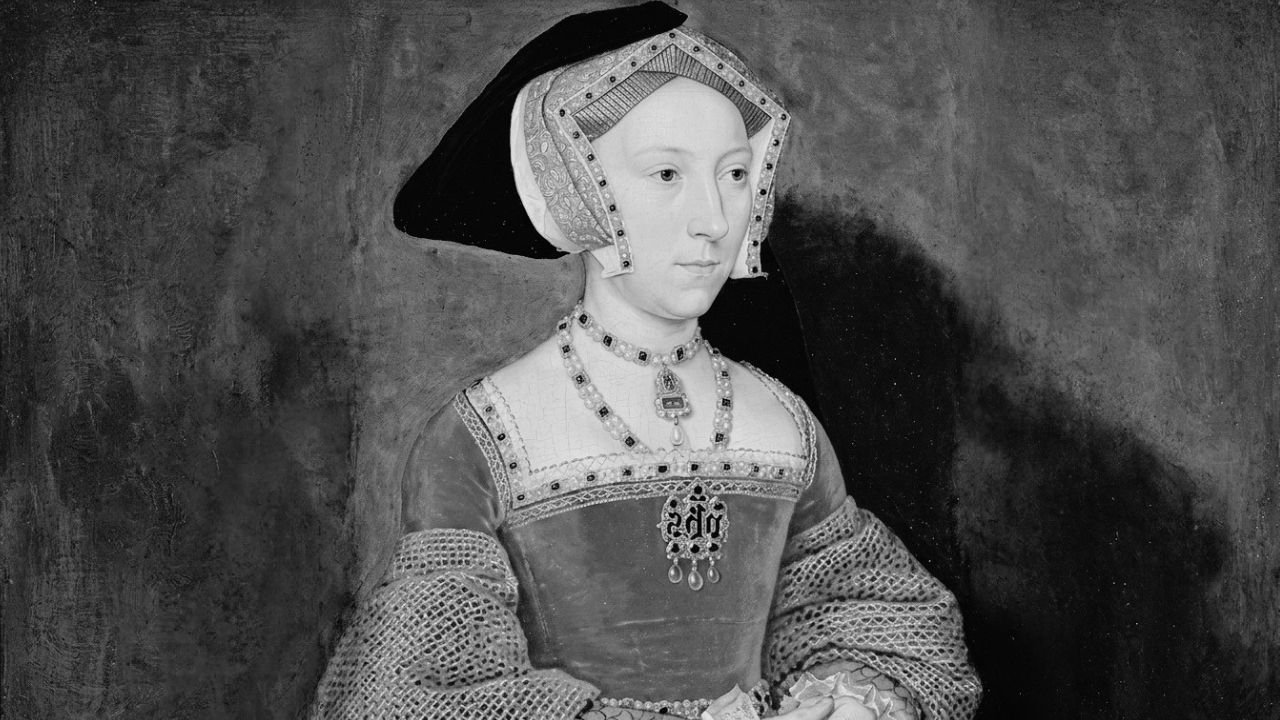
If you have searched for Jane Colt online, you have probably run into conflicting names, sparse details, and genealogy entries that seem to contradict each other. Some records call her Jane. Others say Joan. A few use Jean. It can feel like you are chasing three different women instead of one.
This article sets the record straight. Here is what we actually know about Jane Colt — who she was, where she came from, who she married, and why she still appears in family history searches more than five hundred years after her death.
Jane Colt and Joan Colt Are the Same Person
The first thing worth clearing up is the name. Jane Colt and Joan Colt refer to the same woman. She was the first wife of Sir Thomas More, and she appears under both names depending on which historical source or genealogy database you check.
This is not a mistake or a sign of different women. During the medieval and early Tudor period, the names Jane, Joan, and Jean were used interchangeably in record-keeping. It was simply how naming worked at the time. WikiTree lists her as “Joan Colt (1488–1511)” with a note that she is also known as Jane. ThePeerage supports the same identification.
So if you are searching either name and finding Thomas More connected to both, you are on the right track. They are the same person.
One caution worth mentioning: the Colt family name appears in many later genealogies, and other women named Jane Colt show up in those records. The Jane Colt in this article is specifically the wife of Thomas More. Do not confuse her with unrelated women of the same name from later generations of the Colt family.
Her Family Background in Essex
Jane Colt was born around 1488, most likely in or near Nether Hall in Roydon, Essex. The exact date and precise birthplace are not confirmed in surviving records, so “around 1488” and “probably Essex” are the right ways to frame it.
Her father was John Colt, an Essex gentleman. Her mother was Jane Elrington. According to Encyclopedia.com, Jane was the eldest daughter of John Colt, which placed her at the top of the sibling order in a landed gentry household.
The Colt family moved in social circles that connected to Thomas More’s family, which helps explain how the marriage came about. This was not an unusual match. Families of similar standing in the same region often knew each other well before any formal arrangement was made.
As always with figures from this period, the genealogy databases are helpful but should not be treated as fully verified archival records. FamilySearch lists her parents as John Colte and Jane Elrington, which aligns with other sources, but some details across different databases can vary slightly.
Her Marriage to Thomas More
Jane Colt married Thomas More around late 1504 or early 1505. Some sources specify January 1505 as the marriage date, though that level of precision should be taken cautiously given the nature of records from this period.
At the time of the marriage, More was a rising lawyer and public figure. He had not yet become the Lord Chancellor or the celebrated statesman that history remembers. He was building his career and his household. Jane was his first wife.
For readers who are less familiar with Thomas More: he went on to become one of the most significant figures of Tudor England. He served as Lord Chancellor under Henry VIII. When he refused to accept Henry VIII as the supreme head of the Church in England, he was executed in 1535. The Catholic Church later canonized him as a saint.
All of that happened well after Jane’s death. She died in 1511, more than two decades before More’s execution. The two events are completely unrelated, and it would be wrong to draw any connection between them.
Their Four Children
Jane and Thomas More had four children who survived infancy. They were:
- Margaret More
- Elizabeth More
- Cecily More
- John More
The children were born roughly between 1505 and 1509. FamilySearch, WikiTree, and Britannica all support the number of four surviving children, so this is one of the more reliably confirmed details of Jane’s life.
Of the four, Margaret More became the most historically prominent. She was known for her close relationship with her father and for her role in preserving his correspondence and legacy after his death. Margaret is frequently mentioned in accounts of the More family, and her connection to her father has been written about across many historical studies.
For anyone tracing family history, Jane’s children are the main reason she appears in genealogy databases today. Modern family trees reach Thomas More through her, and that connection draws a lot of search traffic to her name.
Jane’s Role in the More Household
Thomas More’s household during this period was an intellectually active place. The Dutch humanist Desiderius Erasmus, one of the most influential scholars of the Renaissance, visited and stayed with the More family. Erasmus wrote In Praise of Folly during his time in England and dedicated it to Thomas More.
According to Britannica, Jane was a capable hostess for More’s guests. This is a meaningful detail. In Tudor England, managing a household of that kind — hosting scholars, lawyers, and public figures — required real skill and social competence. That was Jane’s role, and by all accounts she handled it well.
It would be going too far to describe her as a collaborator of Erasmus or an intellectual in her own right. The historical record does not support those kinds of claims. But her role as a household manager and hostess in one of London’s most notable homes of that era is well worth acknowledging.
For readers interested in how history connects to everyday life and leadership, Todaybusinesspoint covers a range of topics on people, culture, and historical context worth exploring.
Jane Colt’s Death in 1511
Jane Colt died in 1511. She was approximately 23 or 24 years old. She had been married for about six years and had four young children.
The cause of her death is not firmly established. Some accounts suggest complications related to childbirth or the demands of repeated pregnancies in a short period. This is a reasonable possibility, but it has not been confirmed in a way that makes it safe to state as fact. The cautious position is to say that she died young, and the exact cause is not known.
Some genealogical accounts associate her burial with St Stephen Walbrook in London. Later, the More family’s remains became connected with a family tomb at Chelsea. These burial details should be taken carefully, since later historical accounts and memorial records do not always agree on every point.
After Jane’s death, Thomas More married Alice Middleton. He continued his legal and political career and eventually rose to Lord Chancellor before his famous fall and execution in 1535.
Why Jane Colt Still Matters?
Jane Colt was not a public figure in the way that history usually remembers people. She left no books, no letters, and no political record. What she left behind were four children and a household that played a small but real part in one of the most fascinating periods of English history.
Her importance today is mostly genealogical. Family trees that trace Thomas More’s descendants run directly through Jane. That is why her name keeps turning up in searches on ancestry platforms and historical databases.
But she is also worth knowing about simply as a person. She was a young woman from a gentry family in Essex who married into an extraordinary household, raised four children, managed a home visited by some of the great minds of the Tudor era, and died before she turned 25. That life, brief as it was, deserves more than a footnote.
The name confusion — Jane versus Joan — has obscured her story for some readers. Hopefully, this article clears that up and gives her a clearer place in the historical record she belongs to.
Also Read: