

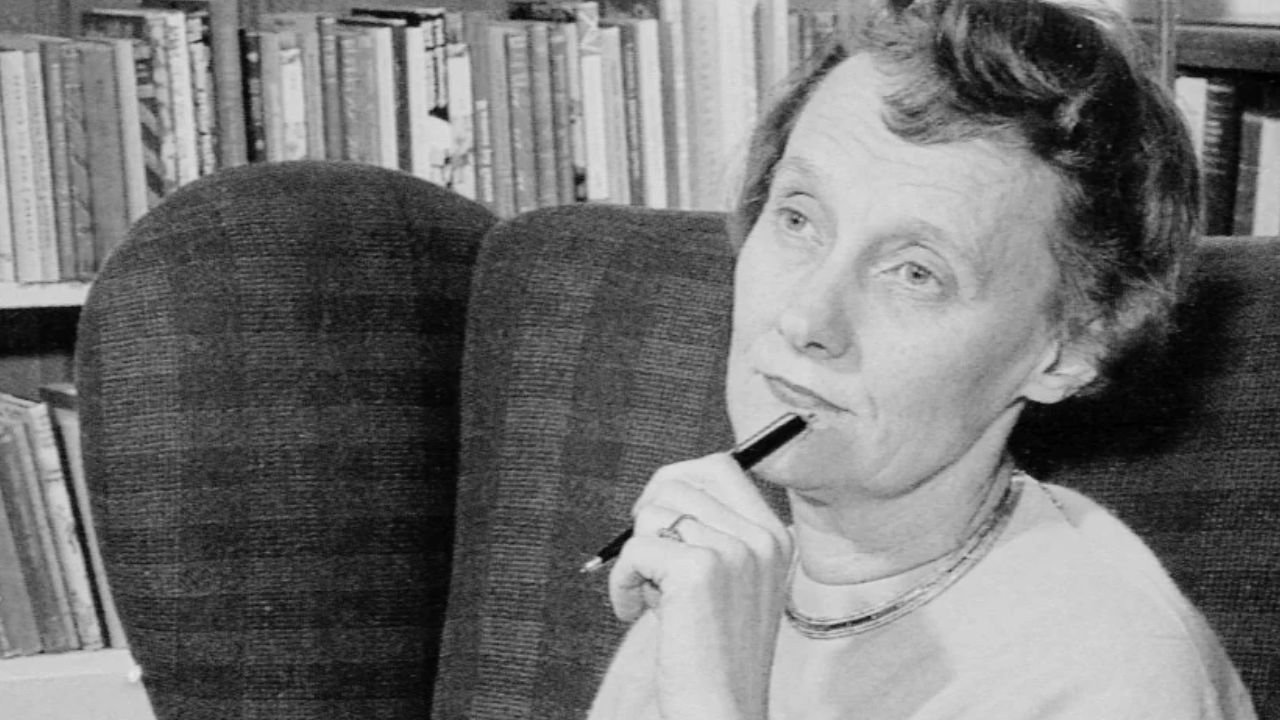
Astrid Lindgren is one of the most widely read children’s authors in history. Her books have been translated into dozens of languages and read by generations of children around the world. But her story does not begin in Stockholm or any major city. It begins on a quiet farm in the south of Sweden, where she was born in the early twentieth century.
This article covers her exact birth date, her precise birthplace, her birth name, her family background, and what life at Näs farm was actually like. It also looks briefly at how her early years connect to the books she later wrote.
Birth Date and Where She Was Born
Astrid Lindgren was born on 14 November 1907. That is the confirmed date, supported by the official Astrid Lindgren website and multiple institutional biographical sources.
Her birthplace is Näs, a farm located just outside the town of Vimmerby in the Småland region of Sweden. This is worth clarifying because many sources simply list “Vimmerby” as her birthplace. Vimmerby is the nearby town, and it is used as a general geographic reference. But the more precise location is Näs, the farm where her family lived and worked.
Småland is a historically rural region in southern Sweden known for its forests, lakes, and farming communities. It is a long way from the Swedish capital, and that distance matters when you consider what shaped her early imagination.
Her Birth Name and the Lindgren Surname
At birth, she was not yet Astrid Lindgren. Her full birth name was Astrid Anna Emilia Ericsson. The surname Ericsson came from her father’s side of the family and was the name she carried through her childhood and youth.
She became Astrid Lindgren only after marrying Sture Lindgren in 1931. The name Lindgren has no connection to her birth family. It is entirely tied to her marriage.
This is a point of frequent confusion, especially for readers doing biographical research or building a family tree. If you encounter records listing “Astrid Ericsson” born in 1907 near Vimmerby, that is the same person who became the internationally known author Astrid Lindgren.
Her Parents and Siblings at Näs
Astrid’s father was Samuel August Ericsson, a farmer who rented and worked the land at Näs. Her mother was Hanna Sofia Jonsson. Together they raised a family of four children in the farmhouse at Näs.
Astrid was the second child in the family. Her siblings were:
- Gunnar — her older brother, who later became a member of the Swedish parliament
- Stina — her younger sister
- Ingegerd — the youngest of the four children
The family’s connection to Näs went beyond simply living there. The farm was linked to the local vicarage, and Samuel August worked the land as a tenant farmer. It was a practical, working household rather than a wealthy one.
For readers doing genealogy research, the combination of her birth date, birth name, parents’ names, and the Näs location provides a reliable set of markers to confirm the right person in historical records.
What Life at Näs Was Like?
Näs was not simply a pretty rural backdrop. It was a working farm, and life there involved real responsibilities. Children were expected to contribute to daily tasks alongside their parents. Farm chores, animals, and the rhythms of agricultural life were part of everyday experience.
At the same time, Lindgren herself described her childhood as happy and secure. She spoke warmly about the freedom she and her siblings had to play outdoors, explore the land, and use their imaginations. That balance — between responsibility and freedom — seems to have been a genuine part of how she experienced those years.
The physical environment of Näs included open fields, wooded areas, and the natural world that comes with Swedish rural life. There were animals, changing seasons, and the kind of space that is simply not available in an urban setting.
Lindgren started school in 1914, at the age of six. Her early education in Småland was the beginning of a path that would eventually lead to work as a proofreader, a secretary, and a journalist before she became a published author. That journey took time. Her famous career did not arrive immediately after childhood.
How Her Birthplace Connects to Her Books?
It would be an overstatement to say that Lindgren’s books are autobiographical. They are not memoirs. Pippi Longstocking, for example, is not a self-portrait, and the events in her fiction should not be read as accounts of things that actually happened to her at Näs.
That said, there is a recognizable connection between the rural world she grew up in and the emotional texture of her stories. The childhood setting of Näs is most often compared to the world depicted in The Children of Noisy Village, which centers on a small rural community, close-knit families, and children who have both freedom and belonging.
The themes that run through her fiction — strong family bonds, children who are taken seriously, outdoor adventure, and a kind of grounded security — are consistent with how Lindgren described her own early years. Näs functions less as a direct source of plot and more as a kind of starting landscape: the place that gave her a certain way of feeling about childhood, nature, and what it means to grow up with space and warmth around you.
She carried those impressions into her writing, even as she created entirely invented characters and stories.
A Brief Timeline of Her Early Life and Key Milestones
To give a clearer picture of how her origins connect to her broader biography, here is a simple timeline of key dates:
- 14 November 1907 — Born at Näs, near Vimmerby, Småland, Sweden
- 1914 — Began school in Vimmerby
- 1926 — Her son Lars was born
- 1931 — Married Sture Lindgren; took the surname Lindgren
- 1934 — Her daughter Karin was born
- 1945 — Pippi Longstocking was published in Swedish
- 28 January 2002 — Died in Stockholm at the age of 94
This timeline shows that there was a significant gap between her birth at Näs and her emergence as a published author. Her path included family life, office work, and years of personal experience before she became the writer the world came to know.
Why These Details Matter?
For most readers, the interest in Astrid Lindgren’s birth and early life is straightforward. People want to know where she came from, who her family was, and how her childhood connected to the books they grew up with or are sharing with their own children.
For others — researchers, genealogists, students, or fans of Swedish literary history — the specific details matter more precisely. The distinction between Näs and Vimmerby, the birth surname Ericsson, the names of her parents, and her confirmed birth date of 14 November 1907 are all useful points of reference.
If you are interested in exploring more profiles of well-known cultural figures and their backgrounds, Todaybusinesspoint covers a wide range of topics with the same factual, grounded approach.
Conclusion
Astrid Lindgren was born Astrid Anna Emilia Ericsson on 14 November 1907, at Näs farm near Vimmerby in Småland, Sweden. She grew up as the second of four children, raised by her parents Samuel August Ericsson and Hanna Sofia Jonsson on a working farm connected to the local vicarage.
Her childhood was shaped by both real farm responsibilities and genuine outdoor freedom. She described those years as happy, and the rural world of Näs left a recognizable mark on the emotional atmosphere of her later fiction — without any single book being a direct retelling of her life.
She became Astrid Lindgren through her 1931 marriage to Sture Lindgren, and her first major published book did not appear until 1945. The woman behind Pippi Longstocking had a long, grounded, and very human story before she became one of Sweden’s most celebrated authors.
Also Read: