

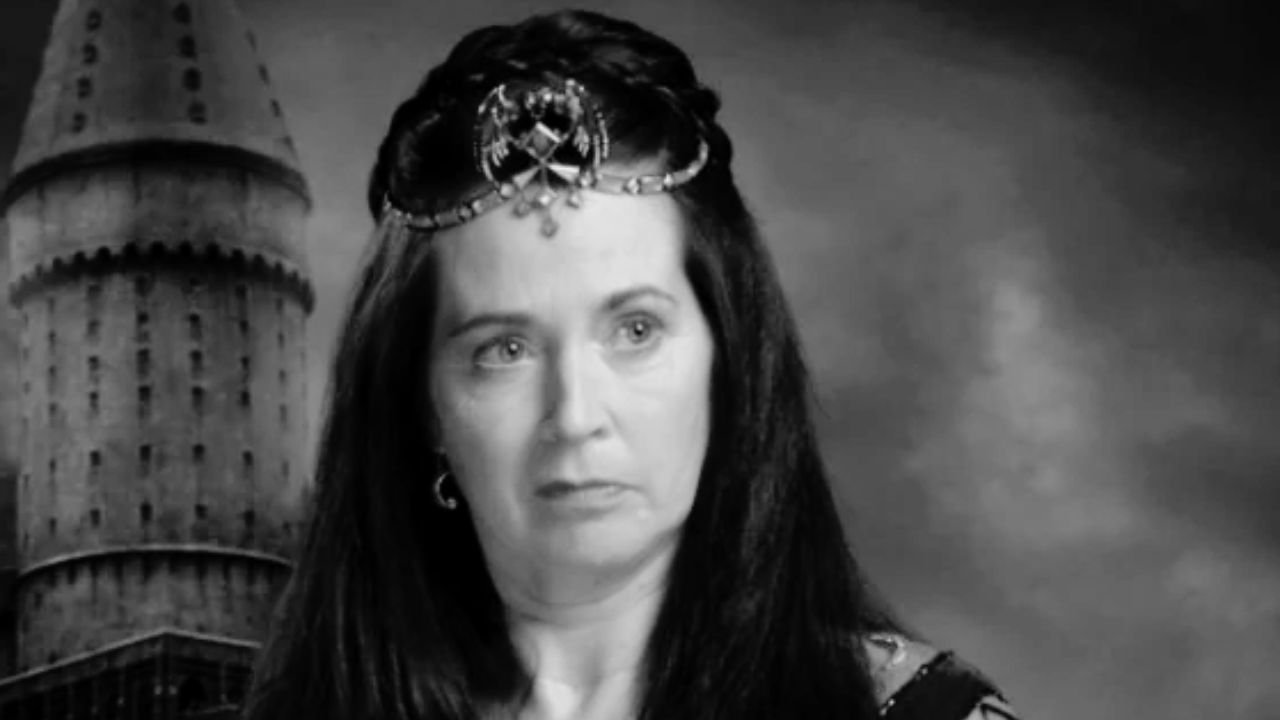
Rowena Ravenclaw never speaks a single line in the Harry Potter series. She appears in no scenes, holds no conversations, and plays no direct role in the main story. Yet her legacy quietly runs through almost everything — one of Hogwarts’ four houses, one of its most haunting ghost stories, and a critical moment in Voldemort’s defeat.
This article covers who Rowena was, what she valued, the story of her famous diadem, and the painful family history between her and her daughter Helena. It also explains how that history connects to the broader Harry Potter narrative in ways that most casual readers don’t fully notice.
One of the Four Founders of Hogwarts
Rowena Ravenclaw was one of four witches and wizards who founded Hogwarts School of Witchcraft and Wizardry. The other three were Godric Gryffindor, Helga Hufflepuff, and Salazar Slytherin. Together, they established what became the most famous school in the Wizarding World.
The founders are placed in a broadly medieval setting — roughly the tenth century, though the novels don’t provide a detailed or precise timeline. Some secondary reference material suggests a date around 993, but that figure doesn’t come from the core books, so it’s worth treating with some caution.
Rowena is remembered as one of the most accomplished witches of her age. Her reputation was built on intellect and learning. Unlike some of the other founders, she isn’t primarily associated with political power, blood status, or military strength. Her legacy is about the life of the mind.
She doesn’t appear as a living character in the story at all. What we know about her comes through portraits, house traditions, her artifacts, and the account of her daughter. In that sense, she’s more of a historical figure within the fiction than a character in the usual sense.
What Ravenclaw House Stands For?
The house Rowena founded reflects what she valued most. Ravenclaw House is associated with intelligence, wit, creativity, originality, and a genuine love of learning. It’s important to note that it isn’t just about being clever — the creativity and individuality side matter just as much.
These values trace directly back to Rowena’s own reputation, which makes the house a living expression of its founder’s priorities. When you understand what Rowena stood for, Ravenclaw House starts to make more sense as a concept.
For a quick comparison: Gryffindor values bravery and courage, Hufflepuff values loyalty and fairness, and Slytherin values ambition and resourcefulness. Ravenclaw’s focus on intellectual curiosity and original thinking sets it apart, though that doesn’t make it superior — just different in what it chooses to celebrate.
It’s also worth avoiding the idea that house traits are strict personality rules. They’re general values, not a complete description of every person who gets sorted there. Rowena likely intended her house to attract those who loved to think and question — not to create a narrow category of approved personalities.
The Ravenclaw Diadem and What It Represented
Rowena’s most famous artifact is her diadem — a sapphire-encrusted tiara that was considered her most prized possession. The diadem wasn’t just a piece of jewellery. It carried an inscription associated with wisdom, reinforcing Rowena’s belief that intelligence and knowledge were among the most valuable things a person could pursue.
The diadem was believed to enhance the wisdom of its wearer. Think of it as a founder’s heirloom, except one with a very specific magical quality tied to learning and insight. It didn’t make the wearer all-powerful. Its significance was specifically about wisdom — not strength, not combat ability, not control over others.
Over the centuries after Rowena’s death, the diadem became lost and legendary within Hogwarts. Many students reportedly searched for it. The fact that it disappeared made it almost mythical — the prized possession of one of the school’s founders, gone without a clear trace.
How it was lost, and where it ended up, is the core of one of the story’s most quietly important threads.
Helena Ravenclaw — Her Daughter and the Theft of the Diadem
Rowena had a daughter named Helena Ravenclaw. That relationship, and what went wrong in it, is the most personal piece of Rowena’s history that the Harry Potter series shares with readers.
Helena grew jealous of her mother’s exceptional intellect and widespread reputation. She wanted to surpass Rowena, to be recognised as brilliant in her own right. Acting on that jealousy, she stole the diadem and fled — eventually making her way to a forest in Albania, hoping that possessing the artifact would help her outshine her mother.
Rowena, by then gravely ill, wanted to see her daughter one final time before she died. She sent a man known later as the Bloody Baron to find Helena and bring her home. Helena refused to return. The Baron, in a fit of rage, killed her — then took his own life out of remorse over what he had done.
Both became ghosts. Helena remained at Hogwarts as the Grey Lady, the house ghost of Ravenclaw. The Bloody Baron became the ghost of Slytherin House. It’s a haunting pair of histories connected by a single act of grief and violence.
What makes this story so affecting is how grounded it is. Helena’s jealousy wasn’t irrational — she grew up in the shadow of a legendary parent, feeling like she couldn’t compete. That kind of pressure is something many people understand, even if the consequences in this story are extreme.
And Rowena, for all her intelligence, couldn’t prevent any of it. She couldn’t repair her relationship with her daughter before it was too late. The diadem she valued so highly ended up being the thing that tore her family apart.
How the Diadem Connects to Voldemort’s Defeat?
The diadem’s story doesn’t end in that Albanian forest. Centuries later, Tom Riddle — who would become Lord Voldemort — learned about the diadem and its location from Helena’s ghost herself. He used that information to find the artifact and turn it into one of his Horcruxes.
He hid it in the Room of Requirement at Hogwarts, hiding it in plain sight within the school Rowena helped found. During the Battle of Hogwarts in Harry Potter and the Deathly Hallows, the diadem was destroyed — a crucial step in Voldemort’s eventual defeat.
So an artifact created by Rowena Ravenclaw, stolen by her daughter out of jealousy, hidden for centuries in a foreign forest, and later corrupted by dark magic, ultimately played a role in ending the greatest threat the Wizarding World had faced in generations. That’s a remarkable chain of consequences starting from one founder’s most prized possession.
For readers who enjoy tracing how the series’ smaller threads connect to its larger story, Rowena’s diadem is one of the best examples. It’s also a reminder that the founders’ legacies were never really finished — they kept shaping events long after the founders themselves were gone.
What Canon Does and Doesn’t Tell Us?
It’s worth being clear about the limits of what the books confirm. The core facts are well established: Rowena was a Hogwarts founder, she had a daughter named Helena, Helena stole the diadem, and the diadem eventually became a Horcrux. Those details come from the books and official Wizarding World reference material.
What the books don’t provide is a detailed biography. Rowena’s exact dates, her appearance, whether she had a spouse, and most aspects of her daily life aren’t confirmed in the main novels. Much of what appears in expanded fan references or wikis is either secondary lore or interpretive material, not direct text from J.K. Rowling’s books.
The Todaybusinesspoint approach to fictional profiles like this one is to stay close to what’s actually on the page — and to say clearly when something is uncertain rather than presenting it as established fact.
Rowena’s story is powerful precisely because it doesn’t require a lot of invented detail. What exists is already rich enough.
A Legacy Built on Ideas
Rowena Ravenclaw is an unusual kind of important character. She never appears in person. She has no dialogue. She doesn’t save anyone or fight anyone. Her importance comes entirely through what she built, what she valued, and what happened after she was gone.
Her house survives. Her diadem shaped history. Her daughter’s grief echoes through Hogwarts’ corridors to this day. And the values she associated with learning — curiosity, wit, creativity, the belief that wisdom matters — are still alive in every student sorted into Ravenclaw.
There’s also a quiet honesty in her story. Rowena is remembered as one of the wisest witches of her age. But wisdom didn’t protect her family from jealousy, estrangement, and loss. That gap between reputation and lived reality gives her character a depth that many figures with far more page time don’t have.
She’s a founder, a mother, the creator of something extraordinary, and a person whose most treasured possession became the instrument of her family’s tragedy. That’s a lot to carry for someone who never speaks a word.
Also Read: